“`
How do you light a log burner?
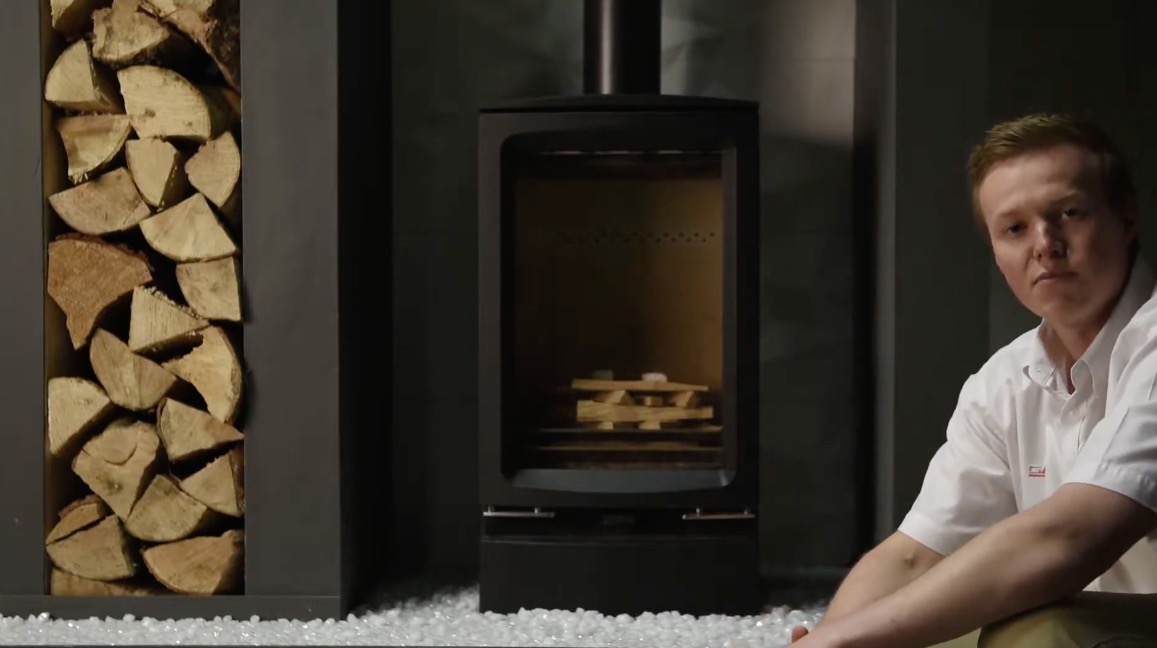
Place two dry logs at the bottom of the firebox. Add smaller split wood across them, followed by dry kindling and a suitable firelighter at the top. Open the air controls as directed by the manufacturer, light the firelighter and close the door. Let the fire establish before reducing the airflow gradually.
Why use the top-down method?
The top-down method reverses the old habit of putting paper beneath a large pile of fuel. The biggest logs sit at the bottom. Smaller wood, kindling and the firelighter sit above them.
The first flames begin near the top of the firebox, helping to warm the flue early and establish an upward draught. The fire then works down through the prepared stack. This normally means less poking, moving and opening of the stove door while the fire develops.
HETAS includes the top-down method in its consumer advice. Your own appliance manual remains the first point of reference because stove controls and lighting procedures vary.
What you need before lighting
- Dry logs: Use untreated, seasoned or Ready to Burn wood with a moisture content of 20% or less.
- Dry kindling: Use small split pieces that catch quickly and leave gaps for air.
- A suitable firelighter: Use a purpose-made product. Never use petrol, spirits or other accelerants.
- A ready firebox: Remove excessive ash but follow the manufacturer’s guidance. Some wood burners work well on a shallow ash bed.
Check that permanent ventilation is clear and that any chimney sweeping or appliance servicing is up to date. You can find logs, kindling and suitable lighting products in our fuel and firelighters range.
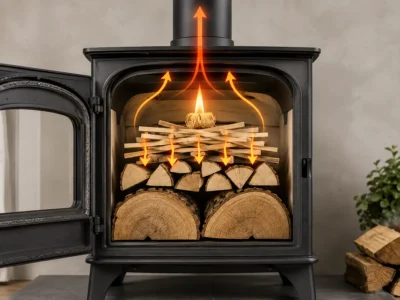
How to light a log burner using the top-down method
Open the air controls
Set the controls to the lighting position described in the stove manual. This commonly means providing a generous air supply at the start, but follow the instructions for your exact model.
Place two dry logs at the bottom
Choose medium-sized split logs that fit comfortably inside the firebox. Leave space between them and keep fuel away from the glass.
Add smaller wood across the logs
Lay one or two smaller pieces across the bottom layer. A loose criss-cross arrangement creates exposed edges and clear air gaps.
Build a small kindling stack
Place several pieces of dry kindling above the smaller logs. Keep the stack stable and open rather than tightly packed.
Put the firelighter at the top
Position one suitable firelighter among the upper kindling. This allows the first heat to rise into the flue.
Light it and close the door
Light the firelighter and close the door as instructed. Do not leave a closed appliance unattended with its door standing open.
Let the fire establish
Wait until the kindling is burning strongly and the main logs are alight. Reduce the airflow gradually rather than shutting it down in one movement.
How should you use the air controls?
Air controls affect how quickly the wood burns and how completely combustion takes place. Some stoves have separate primary and secondary controls. Others use one control or an automatic system.
- At lighting: Use the airflow recommended by the manufacturer so the fire and flue warm promptly.
- Once established: Reduce the air gradually until you have a steady, active flame.
- Avoid prolonged smouldering: Closing the controls too far can cause black glass, smoke and flue deposits.
- Do not overfire: A roaring fire or glowing stove components can indicate excessive firing.
Correct stove sizing matters
An oversized stove may encourage slow, restricted burning. An undersized stove may be pushed too hard. Use our kilowatt calculator as a starting point, then confirm the output with professional advice.
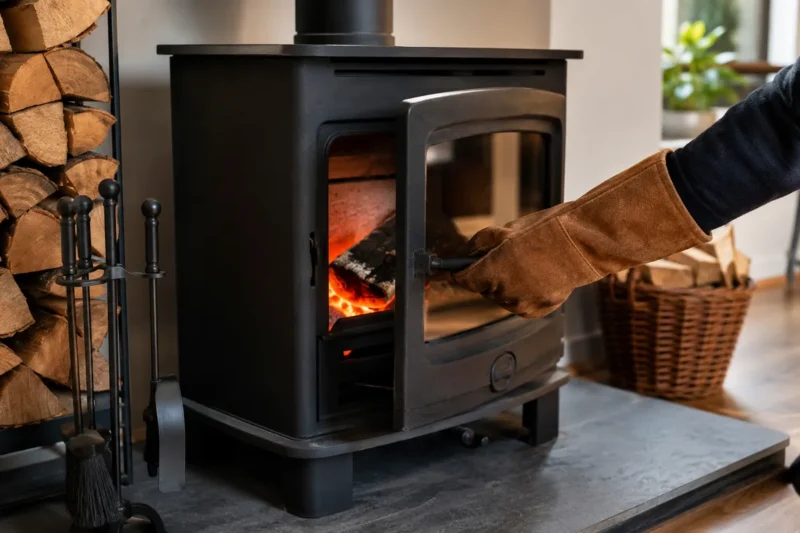
How to refuel a log burner safely
Refuel when the previous load has burned down to a healthy bed of glowing embers. A large log placed on weak, cool embers may smoulder before it catches.
- Adjust the airflow as directed in the stove manual.
- Open the door a small amount first and pause briefly.
- Open it slowly and place the new log on the embers using a suitable glove or tool.
- Stay within the manufacturer’s recommended fuel load.
- Let the new log ignite properly before reducing the airflow again.
See the HETAS guidance on refuelling an appliance safely.
Why is my log burner difficult to light?
| Problem | Possible reason | What to check |
|---|---|---|
| The firelighter burns out | Damp, oversized or tightly packed kindling | Use dry, finely split kindling with open air gaps |
| Smoke enters the room | Cold or blocked flue, weak draught, ventilation issue or unsuitable conditions | Stop if smoke continues and arrange professional advice |
| The glass turns black quickly | Wet wood, insufficient air or low firebox temperature | Check fuel moisture and the appliance instructions |
| The logs hiss or bubble | Excess moisture | Split a log and test the freshly exposed centre |
| The fire races uncontrollably | Too much air, too much fuel or a possible seal fault | Stop adding fuel and arrange an inspection if control is poor |
Persistent smoking or poor control may involve the stove, fuel, chimney, ventilation or installation. Our flue and chimney guide explains the main components.
Signs of a clean, controlled fire
- The flame remains bright and active.
- The logs burn without hissing from excess moisture.
- The glass stays reasonably clear.
- Visible chimney smoke reduces after lighting.
- The fire responds sensibly to the air control.
Correct lighting is one part of responsible use. Read our guide to the facts and negative press surrounding wood-burning stoves for more on PM2.5, Ecodesign appliances, dry fuel and smoke control areas.
Frequently asked questions
Should I light a log burner from the top or bottom?
The top-down method suits many modern stoves because it helps warm the flue and lets the fire establish with less disturbance. Check your stove manual.
Can I use newspaper?
Some manufacturers permit a small amount, but suitable firelighters and dry kindling usually provide a more predictable start. Never burn glossy paper or household waste.
How long should the vents stay open?
There is no universal time. Keep the recommended lighting airflow until the main logs are alight, then reduce it gradually.
Why does smoke enter when I open the door?
Opening too quickly can disturb the airflow. A weak draught, cold or blocked chimney, ventilation issue or weather can also contribute.
Can I make the stove burn slowly overnight?
Do not operate against the manufacturer’s instructions. Closing the airflow until logs smoulder can increase smoke and deposits.
Need help choosing or using a wood-burning stove?
Knight Stoves has more than 50 years of experience with stoves, fires, chimneys and flue systems.
Useful sources
“`