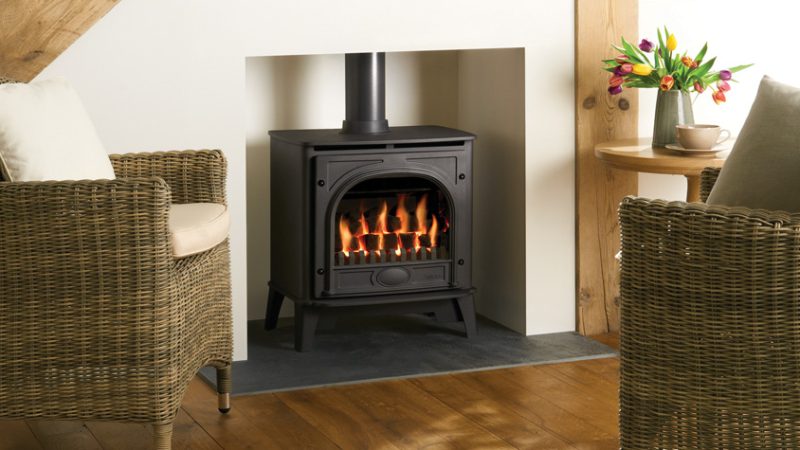
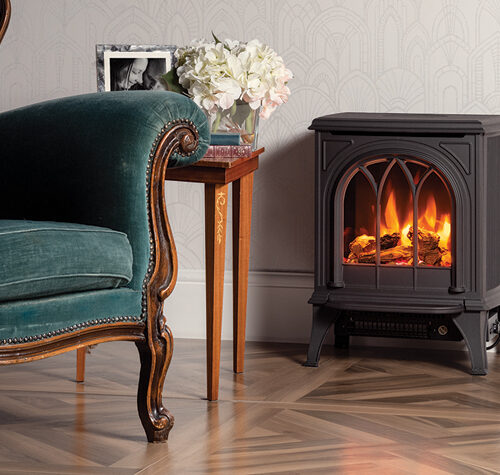
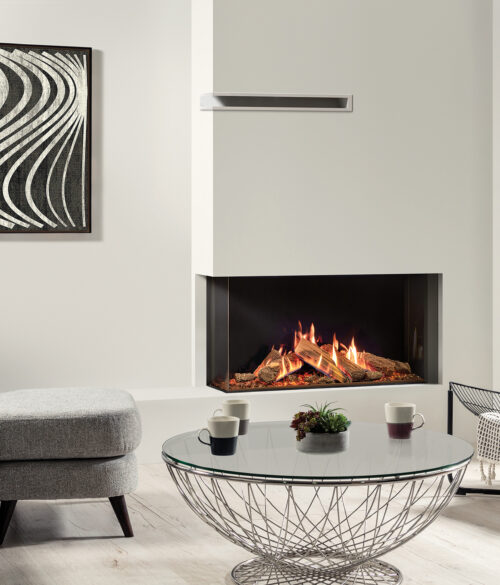
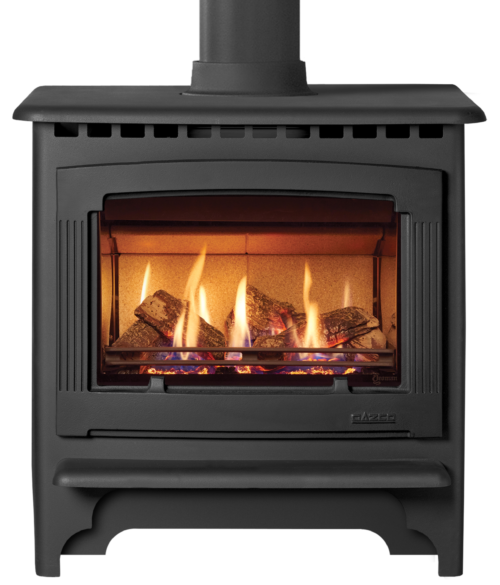
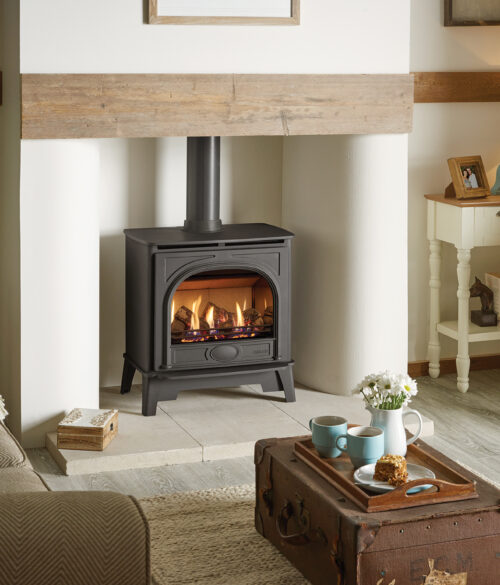
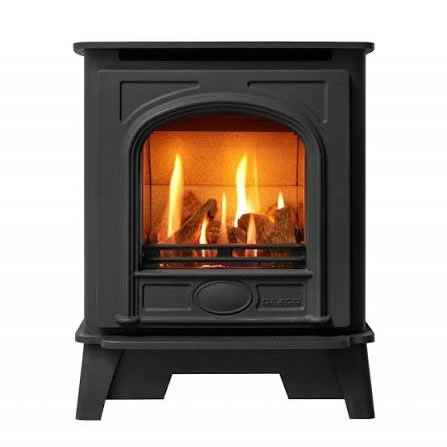
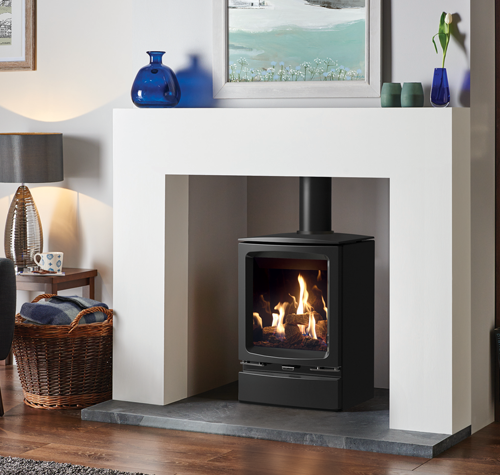
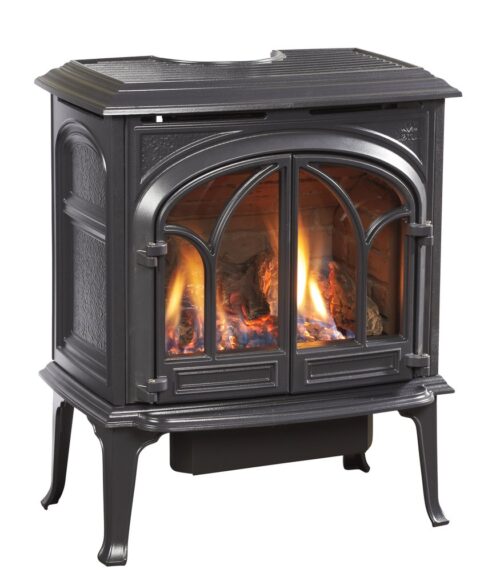
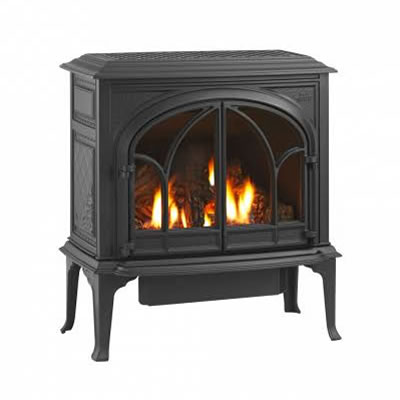
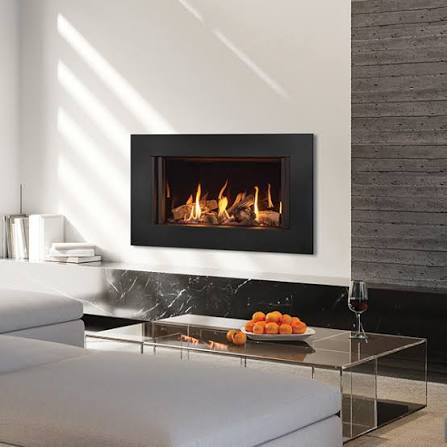
Gas stoves offer the perfect balance between the look of a real fire and the convenience of modern heating. Designed to replicate the appearance of traditional wood burning stoves, they provide instant warmth with clean and controllable performance.
At R W Knight & Son, trading as Knight Stoves, we supply a wide range of gas stoves in both traditional and contemporary styles. With realistic log and coal fuel effects, these stoves create a natural flame appearance without the need for solid fuel or regular cleaning.
One of the main advantages of gas stoves is ease of use. Many models are available with manual controls or remote control operation, allowing you to adjust heat output and flame height at the touch of a button.
Heat Output
Gas stoves typically offer a strong and consistent heat output, making them suitable for both small and larger rooms. Most models range between 3kW and 7kW, providing effective primary heating with precise control.
Benefits of Gas Stoves
– Instant heat with no lighting or fuel preparation
– Clean burning with minimal mess or maintenance
– Controllable output with manual or remote operation
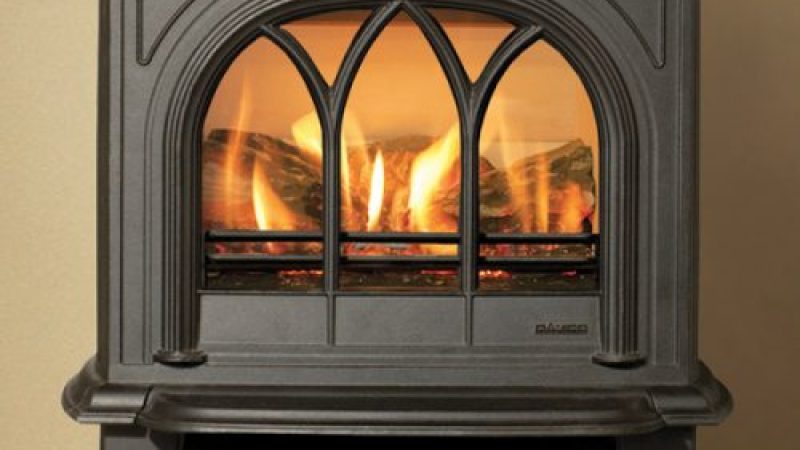
– Realistic flame effect with log or coal visuals
– Consistent performance for reliable room heating
Considerations
– Requires a gas supply or LPG connection
– Installation must meet Gas Safe regulations
– Less traditional than a real wood burning stove
– Limited placement compared to electric options
Gas stoves are an excellent choice for homeowners who want the look and feel of a real fire, combined with convenience and control. If you are unsure which model is right for your home, our team can guide you through the options and installation requirements.
Browse our gas stove range below or visit our showroom to see live displays and compare models in person.
Showing all 25 results
Points to consider when buying a new gas fire or stove:
Chimney – Balanced Flue or Conventional?
If you do not have a traditional chimney, you can choose a balanced flue appliance which can go directly out of the wall. A balanced flue is a double walled. Fresh air comes in one direction from outside and the combustion air from burning the gas is drawn back outside. Depending on the fire, you can often put the flue straight out the back and terminate on an external wall so there is no need to have a chimney going up through or outside your property.
Conventional flue uses an existing chimney to make the gas fire or stove work. The chimney will often need to be lined with a gas stainless steel flexible liner.
Type of Gas – LPG or Natural Gas (NG)?
Natural gas is supplied through your normal house gas supply through a main pipe, so if you should choose an NG appliance. Liquefied petroleum gas (LPG) is stored in pressurised cylinders. If you do not have a mains gas supply you can buy LPG gas stoves and fires.
Hearth
A hearth for gas appliance is specified by the manufacturer and is stove dependent. The stove instructions will tell you in detail how big a hearth should be. Generally, a hearth doesn’t need to be very big because you cannot open the door and there is no risk to ash falling out (as is the case for a woodburning stove).
Cost to run
Generally natural gas is purchased per unit. 1 unit equals 1 therm, 1 therm of gas produces 29.3kw. A gas fire that has an input of 4.3kw will therefore run for 6.81hours (6 hours 45 minutes approx). Similarly, if your gas appliance is running on LPG, 1kg of propane is equal to 196 litres, which produces 13.72kw. Therefore a LPG gas fire or stove that has an input of 4.3kw will run for 3.19hours (3 hours 10 minutes approx). Input of gas varies by stove and fire model, so you can calculate this running cost if you wish. Natural gas equation: 29.3kw divided by input of gas fire = running hours per unit of gas. LPG equation: 13.72kw divided by input of gas fire = running hours per 1kg. We haven’t gone into gas costs as obviously this varies on your tariff.
Remote Control
Many gas fires and stoves have a remote-control option. Some are included and others it can be an optional extra. Having a remote control means you can turn it on without having to even stand up. Different remotes are available. A standard remote allows you to turn the appliance on and up and down. The thermostatic remote means you can set the fire to come on automatically once the room goes below a set temperature or off once the room gets to a temperature and set time schedules.
Maintenance
Gas fires and stoves should be serviced annually like your gas boiler would be. This ensures safe and efficient operation.
Not sure where to start? We’re here to help.
Whether you’re choosing your first stove, looking for a spare part or planning a complete fireplace installation, our team is always happy to offer honest, practical advice.
Fill out the below form and we can help you find the top stoves to fit your space.